Pressure works on buildup. Flow carries loosened material. The nozzle and pipe condition determine how the system is used.
01 · WATER SUPPLY
Water is the working medium.
The water supply and onboard tank feed the jetting system. The tank supplies water; the engine-driven pump creates the pressure used for cleaning.
The route: supply → pump → pressure hose → nozzle.
02 · ENGINE & PUMP
Flow and pressure work together.
Our 40 HP engine drives a system rated at 4350 PSI with 13 GPM water flow. Pressure helps work on deposits, while water volume supports flushing.
Working pressure and nozzle selection are matched to the line. Equipment ratings are not fixed nozzle output.
03 · HOSE & NOZZLE
Directed jets clean inside the pipe.
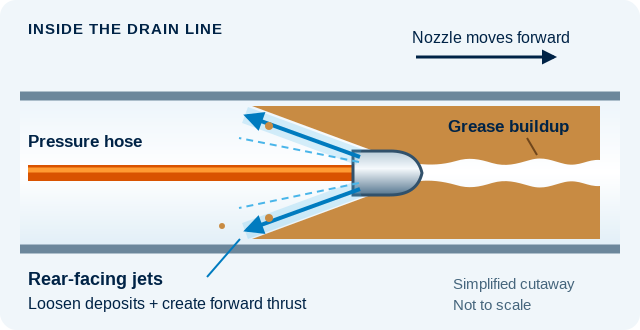
The orange pressure hose delivers water to the nozzle. Rear-facing jets help pull it forward and work against buildup along the pipe wall. Some nozzle designs also have forward jets.
The diagram shows a simplified rear-jet nozzle, rather than one universal nozzle pattern.
04 · FLUSH & REVIEW
Move deposits. Review the line.
Water carries loosened material along the drainage route. Camera inspection can help review accessible sections and any remaining visible concerns after cleaning.
Cleaning removes suitable buildup. Pipe damage requires a separate assessment.
From the water supply to the pipe wall
The van-mounted system supplies water to a pump driven by the engine. The pump sends water through the hose to the nozzle. Rear-facing jets are directed back toward the hose: their reaction helps move the nozzle forward, while the water reaches deposits around the pipe.
Jet patterns vary by nozzle. Some designs include a forward jet for an obstruction; others emphasize wall cleaning. The illustration shows a simplified rear-jet pattern. See US Jetting’s nozzle explanation (new tab) for an example of how forward and rear jets serve different purposes.
What 40 HP, 4350 PSI and 13 GPM mean
- 40 HP · engine power
- Horsepower describes the engine driving the pump. It supports the system’s work, but does not by itself determine whether a particular pipe should be jetted.
- 4350 PSI · pressure rating
- Pounds per square inch describes pressure. Working pressure is selected for the job; the equipment rating is not a promise of pressure at every nozzle.
- 13 GPM · water flow
- Gallons per minute describes water volume. Flow helps transport loosened grease and debris.
These are Hydroforce’s equipment specifications. Hose length, nozzle selection and operating settings affect delivery at the nozzle. Maximum pressure is not the default for every line.
Why it is useful for restaurant grease lines
Restaurant service focuses on accessible main drain piping with removable grease and sludge. We discuss which fixtures are affected, the available cleanout and previous blockages before planning the work. The same equipment can serve suitable residential mains and commercial drains, with an approach matched to each line.
Water and loosened deposits follow the available drainage route. Cleaning a connecting pipe does not replace removal of grease retained in an interceptor tank.
Where inspection fits into the process
A camera can help review visible pipe condition and investigate repeat problems. If an obstruction or standing water limits the view, some clearing may be needed before a useful inspection. Follow-up viewing can help review the cleaned section.
Jetting removes suitable deposits; a collapsed section or displaced connection requires a different response. Tell us about known defects when requesting service so the work can be planned around the condition of the line.
Talk through your next step.
Tell us the property address, affected drains and any previous cleaning or inspection findings. We’ll discuss the service and access your line needs.
Discuss service with Hydroforce